
I recently read with great interest an article in Le 1 Hebdo (No. 521), which devoted this issue to the Unpredictable. Le 1 Hebdo is a French weekly newspaper which each week takes an in-depth look at a topical issue from a variety of perspectives. Each subject is examined by a wide range of experts, from the most ‘traditional’ for a news medium to the most – a priori – remote: journalists, economists, historians, scientists, sociologists, as well as poets, philosophers, authors, cartoonists and sportspeople. A computer graphic brilliantly illustrates the theme of the day. In my opinion, this newspaper is a perfect blend of substance, with its analysis and cross-views, and form, with its original folded format, which can be handled and unfolded to reveal THE key topic. I’m an absolute fan of 1 Hebdo because it goes against the grain of what we know today in the press and information: an in-depth subject rather than a succession of skimmed-over facts, a physical medium (which also exists in digital), a paper format that invites us to immerse ourselves in it and to make it our own (precisely by manipulating it).
Let’s go back to an article in this issue that caught my attention: an interview with Olivier Hamant, Biologist and Director of Research at INRAE, entitled ‘In an unstable world, the quest for performance is counter-productive’. First of all, like you I imagine, I was more than surprised by the title! As an actor in the corporate world, a former CEO, and quite simply as a person, performance is a concept that is very much present in our societies, and is applied in just about every field: academic, economic, financial, physical, sporting, and even artistic, culinary and mental. Yet performance is intrinsically linked to production, hence my curiosity to discover the content of this exchange.
Olivier Hamant introduces the subject by referring to living organisms and the notion of adaptability, which is specific to plants, for example, and different from adaptation: ‘adapting (…) means knowing what is going to happen. It’s also very risky: you leave one narrow path and end up on another narrow path. In contrast, living beings explore, experiment, diversify… They are always ready to change’. To be always ready to change, again according to this expert, you have to be robust rather than solid. To be robust is to be able to remain viable despite fluctuations, a bit like a tree that bends under the force of the wind and resists it. Robustness allows us to maintain a form of stability, however slight, and to adapt to highly variable conditions.
Oliver Hamant makes a clear distinction between robustness and solidity: ‘The solid eventually breaks. The robust, on the other hand, is flexible and does not break, because it harbours an internal equilibrium; it accepts play in the cogs. It’s like a suspension bridge (…) living things function on this dynamic stability’.
What about the performance we talked about at the beginning? Well, ‘we modern humans do just the opposite: we are obsessed with non-dynamic stability, i.e. rigidity (…) In the face of a jolt, a tarmac road doesn’t fluctuate, it cracks’. But the stable, rigid rhythm of performance that we create leads us to jolts and fragility. In this respect, this ultra-performance is counter-productive: ‘our excess of control makes us lose control’.
Let’s apply these words and this analysis to the world of business and innovation. In their desire to generate performance and control – especially control and stability – many companies have locked themselves into a rigid world. As a result, they are incapable of adaptability, and therefore incapable of innovating, because the very nature of innovation lies in the search for dynamics and in action, by breaking down imprisoning models that are supposedly solid or even paralysing. As the author of this interview suggests, ‘we need to be robust (…) we need to set ourselves in motion in order to be able to switch’, a total change of paradigm and mental and cultural reference point.
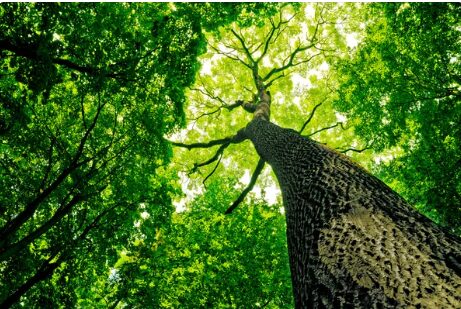
I often use the image of the tree as a model for thought, construction and development (of brands and innovations in particular). A tree is a living creature that is deeply rooted in the ground and reaches for the sky thanks to its sturdy trunk. The tree develops its branches, foliage and fruits according to the seasons, the forces and attacks of the climate, and the insects and birds that come to ask for protection or food. It is the perfect combination of robustness and dynamism in an ecosystem that fluctuates and is not always favourable.
Let’s explore, experiment and diversify.
Thank you to 1 Hebdo and all your team for your enlightening, relevant and inspiring writing.
____________________________________________________________
Comment (re)définir la performance dans notre monde instable ?
 J’ai récemment lu avec beaucoup d’intérêt un article du 1 Hebdo (n°521) qui consacrait ce numéro à l’Imprévisible. Le 1 Hebdo est un journal hebdomadaire français qui chaque semaine traite avec profondeur une question d’actualité avec plusieurs regards. Chaque sujet y est examiné par une très large diversité d’experts, des plus ‘classiques’ pour un media d’information aux plus – a priori – éloignés : journalistes, économistes, historiens, scientifiques, sociologues, et aussi poètes, philosophes, auteurs, dessinateurs, sportifs. Une infographie illustre brillamment la thématique du moment. Selon moi, ce journal allie à la perfection le fond au-travers l’analyse et les regards croisés, et la forme, grâce à un format original plié, manipulable à souhait et totalement dépliable pour y découvrir LE sujet phare. Je suis une fan absolue du 1 Hebdo car il va à contre-courant de ce que nous connaissons aujourd’hui dans la presse et l’information : un sujet approfondi plutôt qu’une succession de faits survolés, un support physique (qui existe en digital également), un format papier qui nous invite à nous plonger dedans et à nous le réapproprier (par la manipulation précisément).
Revenons à un article de ce numéro qui a retenu toute mon attention : un entretien avec Olivier Hamant, Biologiste, Directeur de Recherche à l’Inrae, intitulé « Dans un monde instable, la recherche de performance est contre-productive ». J’ai tout d’abord, et comme vous je l’imagine, été plus que surprise par ce titre ! En tant qu’acteur en entreprise, ancienne dirigeante, et en tant que personne tout simplement, la performance est un concept ultra présent dans nos sociétés, qui se décline à peu près dans tous les domaines : scolaire, économique, financier, physique, sportif, et même artistique, culinaire et mental. Or la performance est intrinsèquement liée à la production, d’où ma curiosité à découvrir le contenu de cet échange.
Olivier Hamant introduit le sujet en faisant référence au vivant et à la notion d’adaptabilité qui est propre au végétal par exemple, celle-ci étant différente de l’adaptation : « s’adapter (…) signifie que l’on sait ce qui va se passer. C’est aussi très risqué : on quitte une voie étroite pour s’enfermer dans une autre voie étroite. Au contraire, les êtres vivants explorent, expérimentent, diversifient… Ils sont toujours prêts à changer ». Pour être toujours prêt à changer, toujours selon cet expert, il faut être robuste plutôt que solide. Être robuste c’est être capable de rester viable malgré les fluctuations, un peu comme un arbre qui ploie sous la force du vent et qui lui résiste. La robustesse permet de garder une forme de stabilité même infime et de s’adapter à des conditions très variables.
Oliver Hamant pose une nette distinction entre robustesse et solidité : « Le solide finit par casser. Le robuste, lui, est souple et ne casse pas, car il héberge un équilibre interne ; il accepte du jeu dans les rouages. C’est comme un pont suspendu (…) le vivant fonctionne sur cette stabilité dynamique ».
Qu’en est-il de la performance dont nous parlions au début ? Eh bien, « nous, les humains modernes, faisons tout le contraire : nous sommes obsédés par la stabilité non dynamique, c’est-à-dire rigide. (…) Face à une secousse, une route goudronnée ne fluctue pas, elle craque ». Or le rythme de performance stable et rigide que nous créons nous mène justement à des secousses et à des fragilités. En cela cette ultra performance est contre-productive, « notre excès de contrôle nous fait perdre le contrôle ».
Appliquons ces propos et cette analyse au monde de l’entreprise et de l’innovation. En voulant générer de la performance et du contrôle – surtout du contrôle et de la stabilité -, de nombreuses entreprises se sont enfermées dans un monde rigide. Elles sont ainsi incapables d’adaptabilité, incapables par conséquent d’innover car la nature même de l’innovation réside dans la recherche de dynamique et dans l’action, en cassant les modèles enfermants soi-disant solides, voire paralysants. Comme le suggère l’auteur de cette interview « nous avons besoin de robustesse (…) d’une mise en mouvement pour pouvoir basculer», d’un changement total de paradigme et de référent mental et culturel.
J’utilise souvent l’image de l’arbre comme modèle de pensée, de construction et de développement (des marques et des innovations notamment). Un arbre est un être vivant profondément ancré dans le sol et porté vers le ciel grâce à un tronc robuste. L’arbre développe son branchage, son feuillage et ses fruits au gré des saisons, des forces et des attaques climatiques, des insectes et des oiseaux qui viennent lui demander protection ou s’y nourrir. Il allie parfaitement robustesse et dynamique dans un écosystème fluctuant et pas toujours favorable.
Explorons, expérimentons, diversifions.
Merci au 1 Hebdo et à toute votre équipe pour vos écrits éclairants, toujours très pertinents et inspirants.
