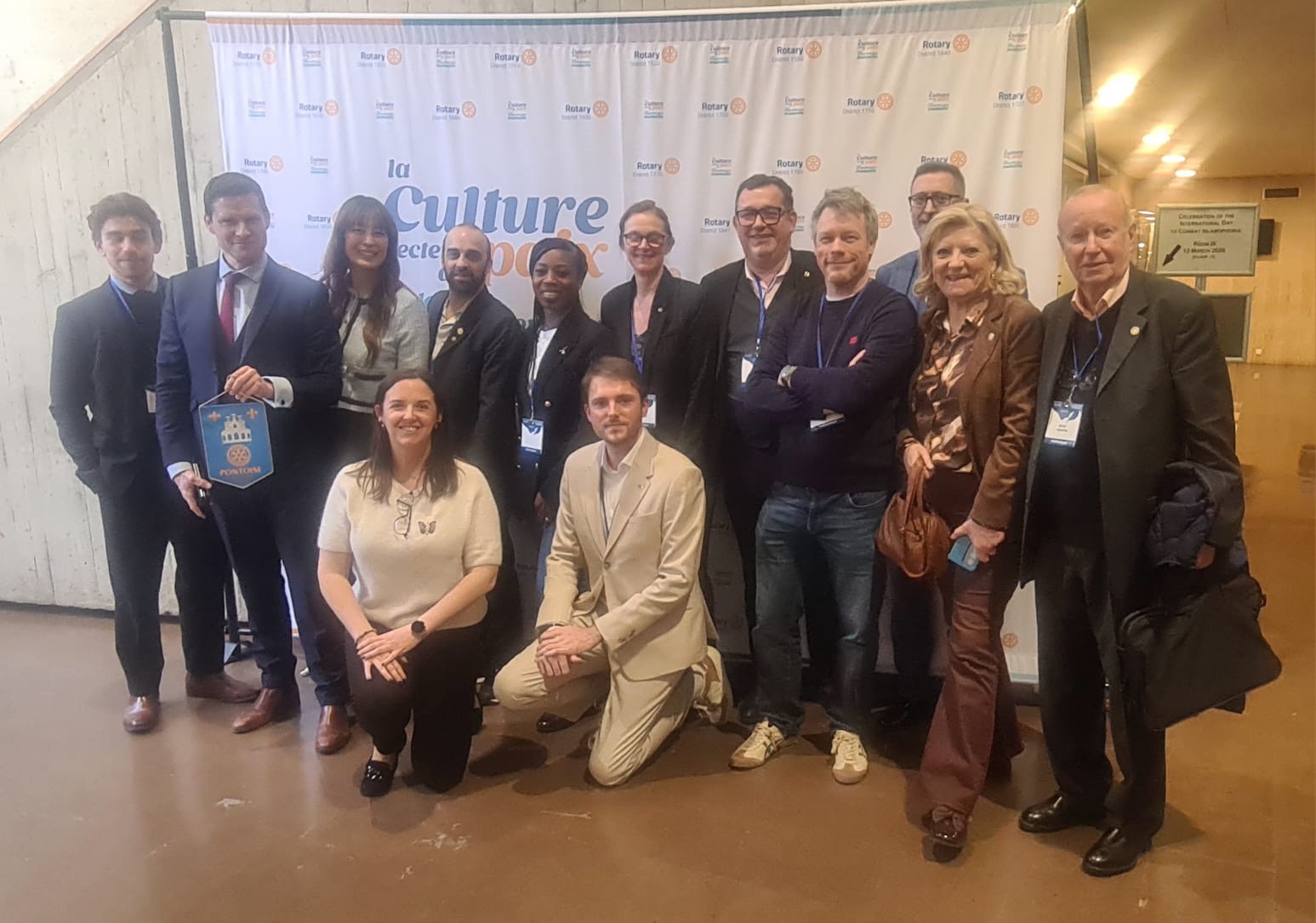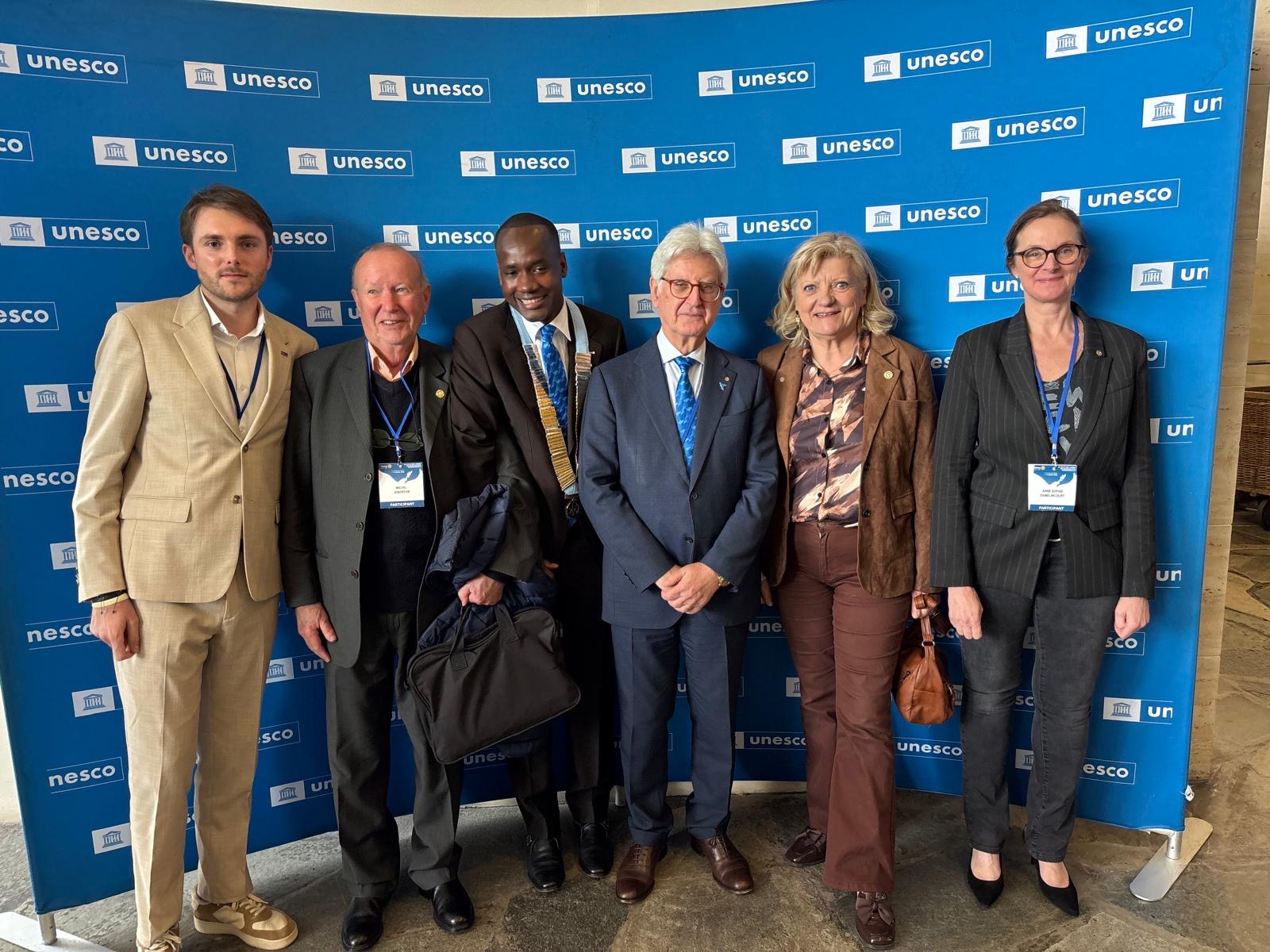
I was lucky and proud so be part of the Forum organised by Rotary International – District 1660, in the beautiful building of UNESCO in Paris last Saturday. This event gathering 800+ attendees across 38 countries was a fabulous opportunity to invite a wide panel of French and international speakers coming together to share their thoughts on the new multilateralism.
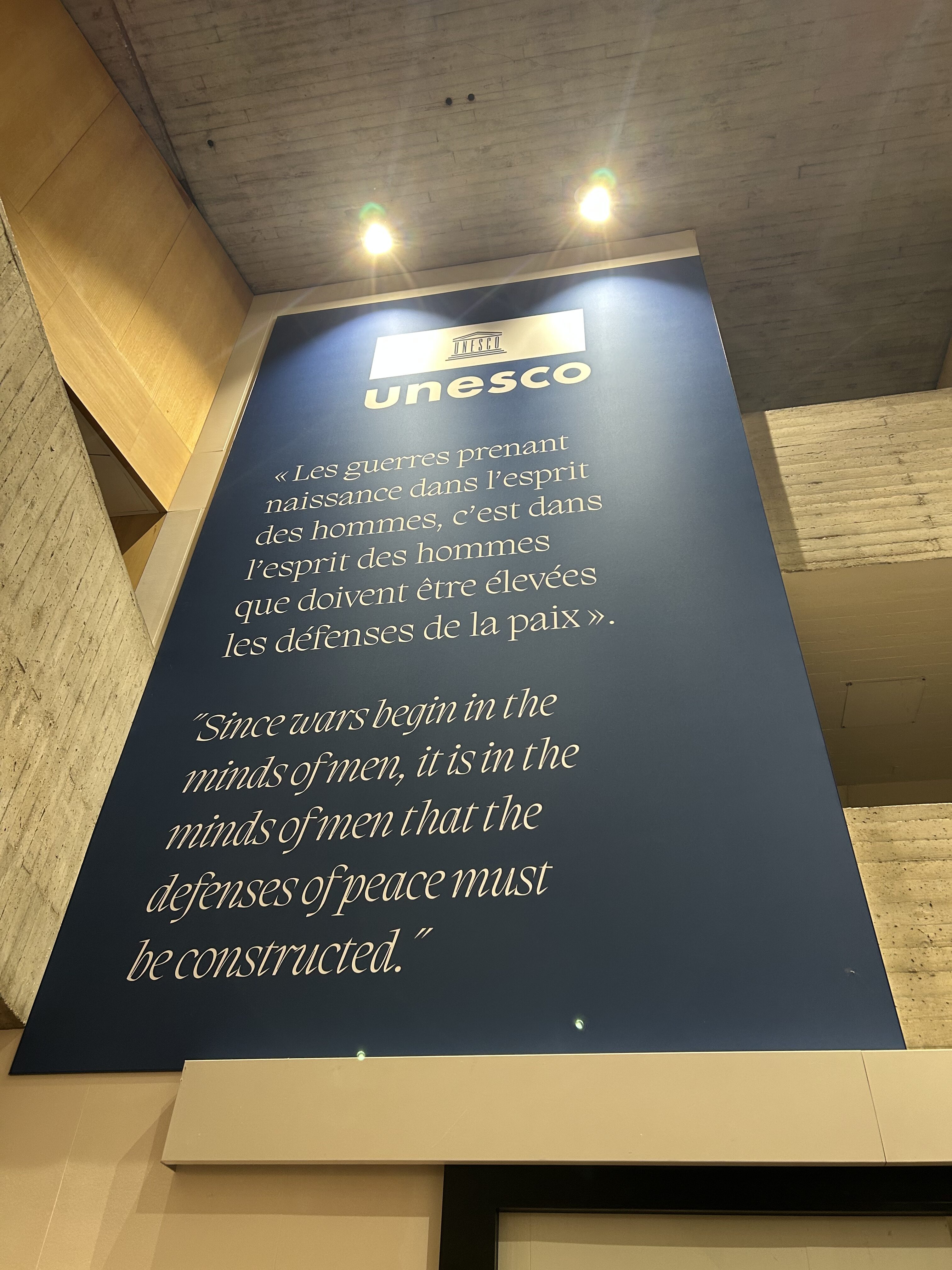
The Forum was organised around three themes: health, education and peace, the key pillars of UNESCO.
Mamadou Camara, District 1660 Governor opened the forum and warmly welcomed us, reminding our core values as Rotarians as well as the importance of being into action.
Alain van de Poel, Rotary Vice President 2025-2026, insisted on our duty to be exemplar, to act as responsible citizens with tangible actions and reminded us:
the world has changed, the associative world has changed as well.
Rotary is a global organisation of 1,2 million members in 200 countries, united by universal values, with a mission to build peace around the world.
These values must be turned into actions. In a world of instability we have a role to play, building our future on a daily basis.
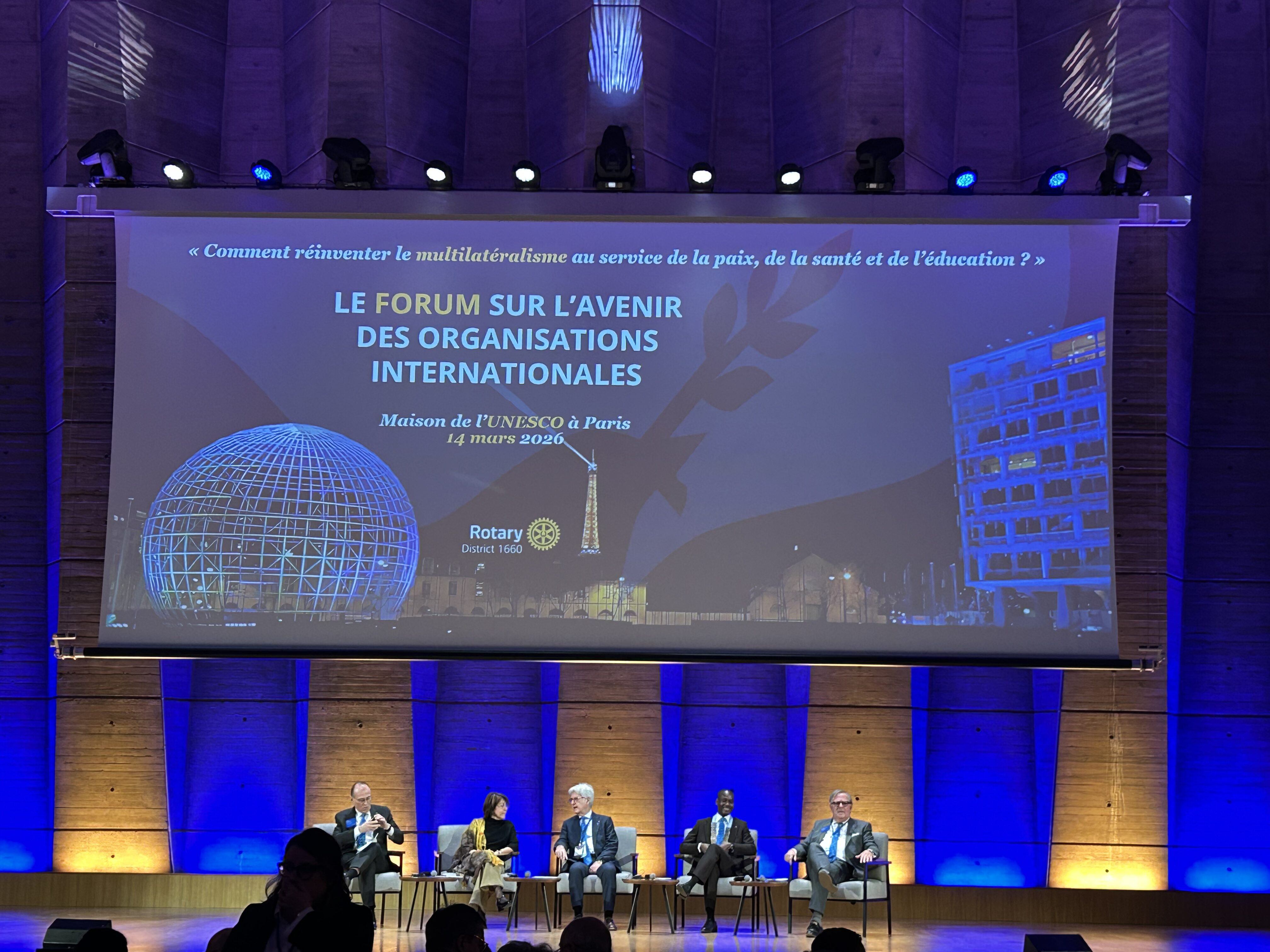
For Sabina Colombo, UNESCO,
Rotary international has remained a supporter of the creation of UNESCO and has a presence into local reality and the civil society. Peace must be patiently built every day through education. This forum gathering representatives of states and civil society represents the Need for collective action.
Francesco Arezzo, the Rotary President for 2025-2026, opened the forum with these words:
Peace must be built through culture and education, where education is fundamental and foundational to peace.
He set the tone of the day presenting the themes of the forum on how global institutions can work with the civil society locally. Our global goals are defined by institutions which can see across borders, implemented locally, through people and tangible actions.
We are united for good, education, culture and science are a strong force for peace.
Panel 1: Global Health moderated by Dr Francois Sarkozy
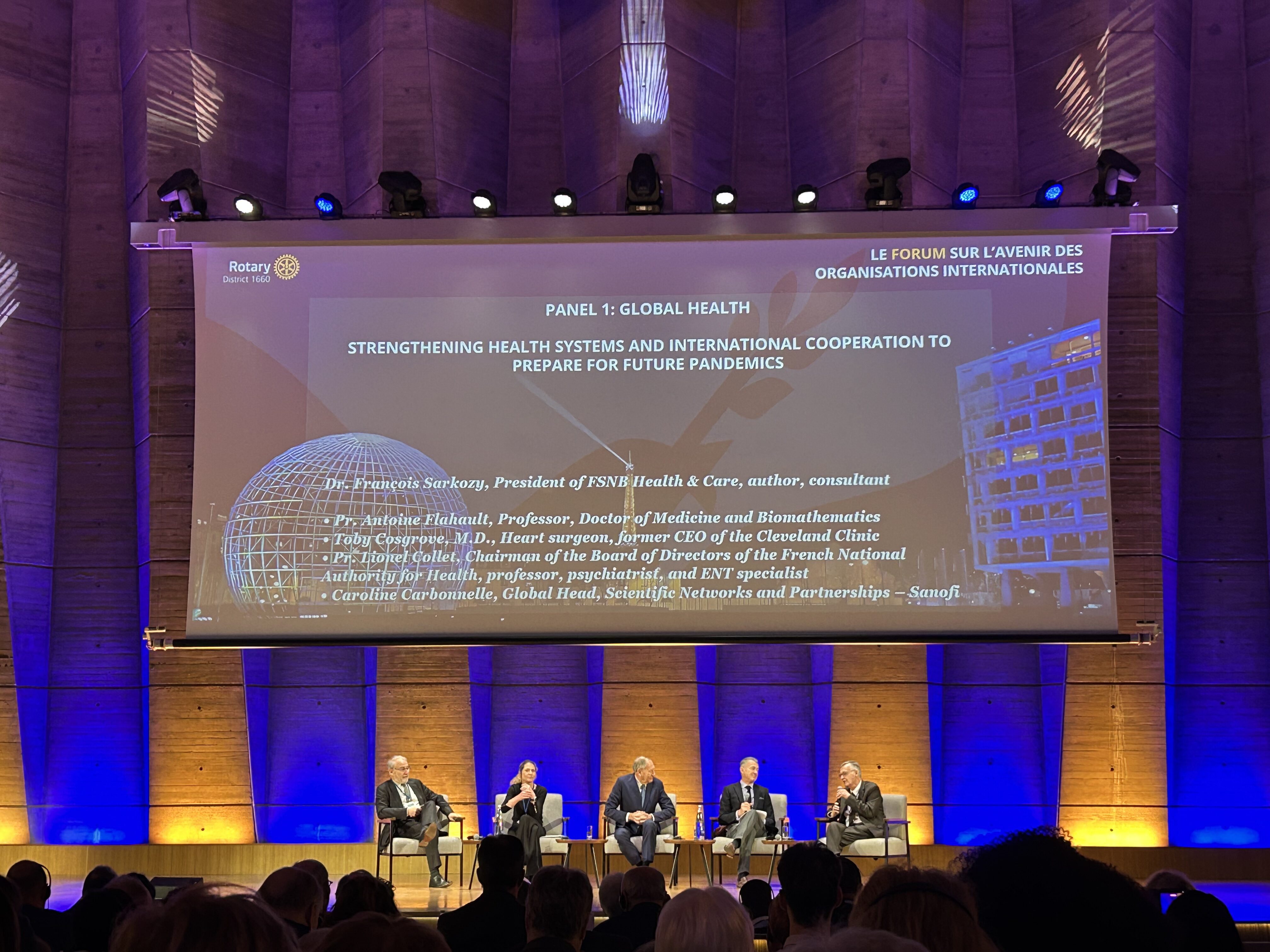
This panel was about strengthening health systems and international cooperation to prepare for future pandemics.
The Covid 19 has been a choc, we weren’t prepared. But we have learnt that communication between governments, hospitals, research bodies is really needed.
Thanks to these learning, how can we detect weak signals quicker for a better prediction?
We now have surveillance systems to share data between public and private sectors across countries in order to be more proactive than reactive. Artificial Intelligence (AI) and maths models can forecast, we have changed the way we make surveillance (like waste water which is very cheap). We have many available tools to better predict. There are lots of discussions at the European level, on regulations, innovations, partnerships.
Trends can be followed on Google (influenza, paracetamol) and can help decision makers to take actions (ex: Mayor of NYC who declared emergency state because of the flu).
However, there are some concerns and challenges in the US with the decrease of fundings, skepticism in science, as well as the stop of US fundings in WHO.
There was a discussion around producing vaccines locally (in Africa for example) and on the impact of global organisations governance on local freedom, before concluding on the fact that Health is an investment for the future.
Panel 2: Rethinking education in the age of digital technology and growing inequality
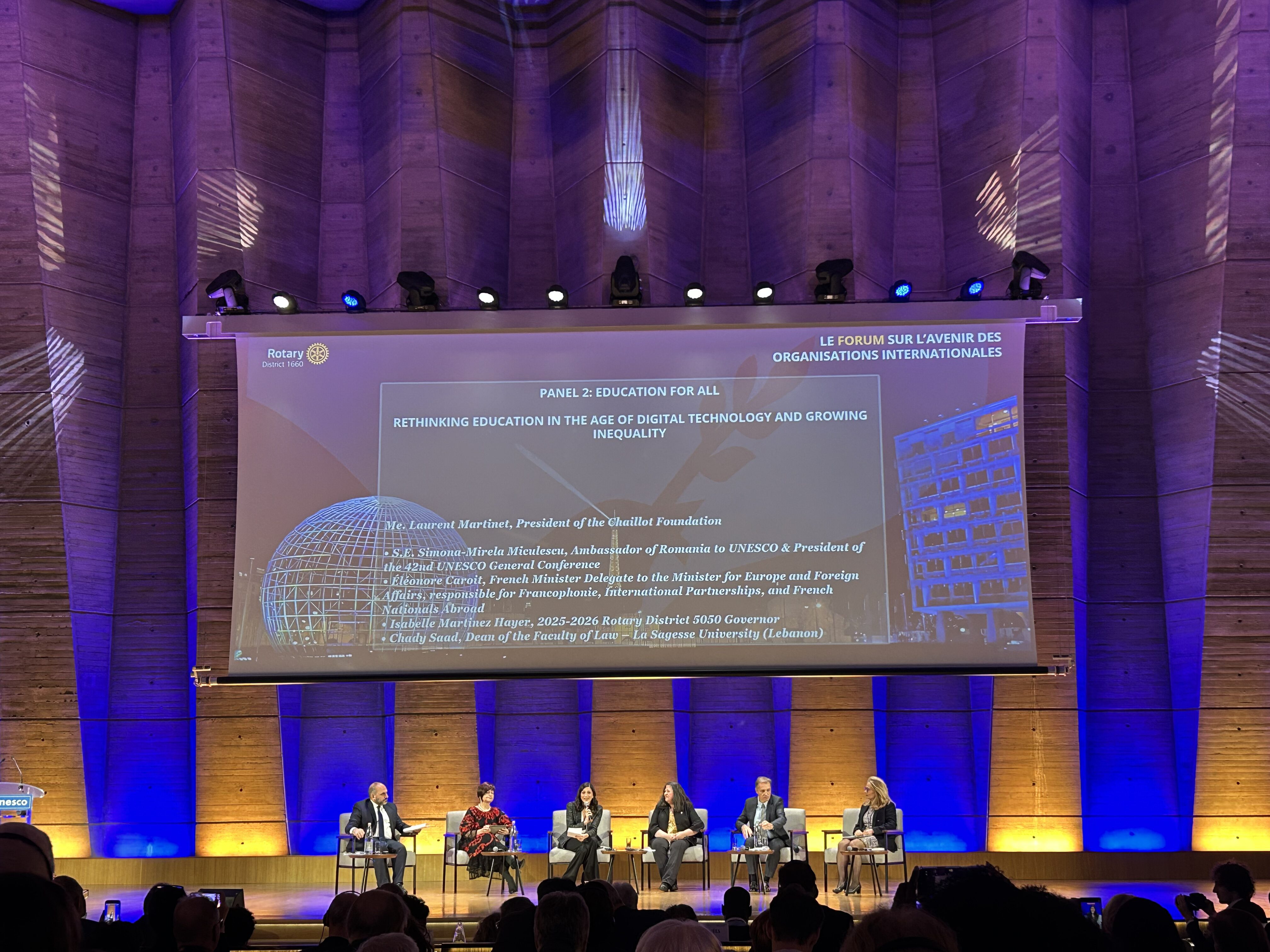
This panel dedicated to education for all in the time of digital technology, raised the challenges around the world on equality when it comes to education in the digital economy system.
Education is at the heart of growth of the global economy, every dollar invested in education grow the economy. However, teachers are lacking due to weak funding with a massive impact on how we transfer knowledge to the younger generations.
Children are deprived of schooling in many countries because of wars. We need to provide urgent education emergency. Digital technology tools can answer this issue as well as fake news and harassment ones.
The panel expressed the need to reinvent education in our changing world, to build a better future for children with a resilient education system.
There was a testimony on Lebanon which has the largest network of French schools. Due to crisis and wars, remote education has been stopped and raises high concerns for the children and their future.
What is education for all?
Digital technology has to be more than accessible but poses questions of quality, ethics. Digital technology raises new challenges with AI: education is not about passing knowledge but it is all about judgment, structure, critical reasoning. How do we prepare the world where knowledge is instantaneous?
Education is a public and common good for UNESCO and digital technology is not only a technical issue: do they reduce or increase inequality? Recent work has shown that digital technology amplifies gender and social inequality. There is a need for international cooperation to enable digital technology to work for equality, it is a collective resposibility.
In this landscape, the role of teachers are irreplaceable, they bring care and attention to learners.
In 2022 it was recognised that digital education was a human right and UNESCO is calling to make digital technology equal and human.
Isabelle Martinez Hayer, 2025-2026 Rotary District 5050 Governor has a speech on education inequality, with the key question: How our systems can deliver education to more people? She raised the dangers of AI for vulnerable people and the youth, the difficulty to identify where is authentic content and where is AI curated content.
Youth doesn’t know institutions like UNESCO or Rotary. We need to build connections with the youth, with peer to peer relationships. We need to promote peace to our children.
She insisted on ethics in modern education, the role of content, creativity, communication, collaboration, critical thinking and control (the 6Cs).
Children and the whole education system need to take control of AI rather than being dominated by AI. We have to learn from each others.
Panel 3: Peace and Safety
This third panel was dedicated to the role of international organisations with the question: what role should international organisations play in preventing and resolving modern conflicts?
International organisations existed after Vienna Congress (1815), international laws do exist. Since then the world has a very different face: Russia comes from USSR, China became more powerful. And the United Nations (UN) doesn’t play its role, with a strong impact on international laws. Reforms are inactive because of vetos, the raise of technology and of new countries changing the rules. In addition, the US doesn’t respect international laws, they are accountable for no one.
The question is: how can we build a new security council at the UN?
Then, the panel opened a discussion on the role of Church, showcasing how digital tools were in the hands of tyrannic countries, how “religion was being manipulated to love evil”, how the new challenges of climate change, technology, information at a finger tip with social media were buidling negative thoughts.
This panel was followed by a speech delivered by the Ambassador of Pakistan to France, S.E. Mumtaz Zahra Baloch, explaining the need for international laws and multilateralism which are critical in small states:
If you protect your country your protect you collectively”. But “the United Nations has lost its voice in terms of security and peace. UN budget is not enough to implement projects.
The discussion ended by a speech by an Admiral Alain Oudot de Dainville, explaining how dominant countries (GDP, size) were leading the world: ‘
International law is often that the wolf attacks the lamb and is legitimate.
He claimed for a reform, in order to revamp the governance of the United Nations in our changing world. According to him, war has a new face: “the conflicts change because the world changes. The world was built by the winners of World War II, global organisations were built on this model. Now, there is more violence, technology dishumanises war.
The solidarity, the brotherhood you have in Rotary is exactly was we need,
before warning us against fragmentation due to countries which impose their laws, and called for consensus with universal principals to implement.
He concluded:
UN is where counties get together. We must rely on universal brotherhood to govern alongside international organisations. We have to keep what we have in our heart.
Thank you Mamadou Camara, to all the speakers and organisers to make this forum happen.
This day offered unique opportunities to share knowledge, to question ourselves and to spend time with Rotarians from my club and from all around the world.
As a conclusion, I would like to add a quote from the Dalai Lama which I found in Mumbai a couple of weeks ago and which perfectly summarises the content of this day and our values:
Open your arms to change, but do not let go of your values.